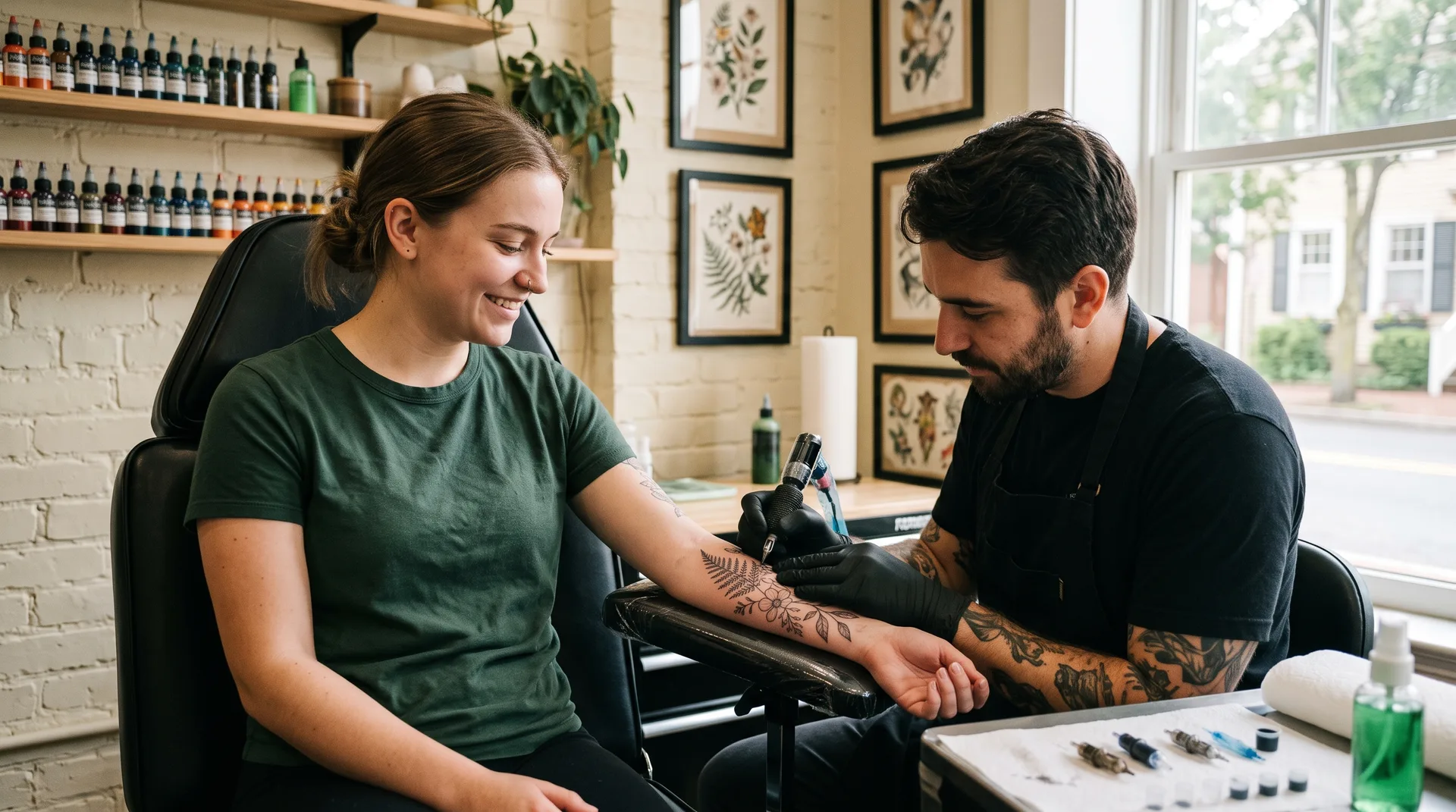
Tattoo Aftercare Guide - How to Heal Your New Tattoo Correctly
The tattoo session is only half the work. How you care for your tattoo during the healing period determines whether it looks sharp and vibrant long-term - or faded and patchy within a year.
Why Aftercare Matters More Than Most People Realize
A tattoo is a wound. The needle deposits ink into the dermis - the layer of skin beneath the surface - and the body's healing response is what seals it in place. How you manage that healing process directly affects the final result. A tattoo that is cared for properly will heal with crisp lines, vibrant color, and consistent saturation. A tattoo that is neglected will fade, peel unevenly, and lose detail.
The artists at Mr. Tattoo in Burlington, NJ provide specific aftercare instructions for every piece. What follows is a comprehensive guide to the healing process so you understand not just what to do, but why each step matters.
The First 24 Hours
When you leave the shop, your tattoo will be covered with a bandage, plastic wrap, or a specialized healing film (like Saniderm or Tegaderm). Leave it on for the time period the artist recommends - typically two to four hours for traditional wrap, or up to 24 hours for healing film.
When you remove the covering, wash the tattoo gently with clean hands and a fragrance-free soap. Use lukewarm water - not hot. Pat it dry with a clean paper towel (cloth towels can harbor bacteria). Apply a thin layer of unscented moisturizer or the specific aftercare product your artist recommends.
During the first 24 hours, the tattoo will weep plasma and excess ink. This is normal. Do not panic. Keep it clean and moisturized.
Days 2 Through 7 - The Active Healing Phase
During the first week, the tattoo will go through several visible stages. The surface will feel tender and look red and slightly swollen for the first two to three days. After that, it will begin to peel - similar to a sunburn. This is normal and expected.
During this phase:
- Wash the tattoo twice daily with fragrance-free soap and lukewarm water
- Apply a thin layer of unscented moisturizer after each wash - do not over-moisturize, which can clog pores and cause ink to push out
- Do not pick or scratch at peeling skin - pulling off peeling skin removes ink and creates uneven healing
- Keep the tattoo out of direct sunlight - UV exposure during healing is one of the most common causes of fading
- Do not submerge the tattoo in water - no swimming, no baths, no hot tubs during the healing period
- Wear loose, breathable clothing over the tattoo if it is in an area that clothing covers
Weeks 2 Through 4 - Surface Healing
By the end of the first week, the surface peeling should be mostly complete. The tattoo will look milky or cloudy during this phase - this is the outer layer of skin regenerating over the ink. It is sometimes called the "milk skin" phase and it can make the tattoo look dull or faded. This is temporary.
Continue moisturizing and sun protection during this phase. The surface skin will continue to settle and clarify over the following weeks. By the end of week four, the surface of the tattoo should look close to fully healed.
Months 2 Through 6 - Deep Healing
Even after the surface looks healed, the deeper layers of skin continue to settle for several months. The ink is still stabilizing in the dermis. This is why a tattoo often looks slightly different at six months than it did at one month - the colors become richer, the contrast sharpens, and the overall appearance improves as the healing completes.
Sun protection remains important during this phase. A good SPF applied over a fully healed tattoo before sun exposure will significantly extend its vibrancy over the years.
Signs of a Problem During Healing
Most healing is uneventful. But there are warning signs to watch for:
- Excessive swelling, warmth, and redness that worsens after day 3 - Normal inflammation peaks in the first 24-48 hours and then decreases. If it is getting worse, not better, that is a sign of infection.
- Yellow or green discharge - Clear plasma is normal. Yellow or green discharge is not.
- Fever or flu-like symptoms following a tattoo session - these should be evaluated by a medical professional.
- An allergic reaction to the ink - uncommon but possible, particularly with certain red and yellow pigments.
If you have any concerns about how your tattoo is healing, contact Mr. Tattoo directly. The team can assess whether what you're seeing is normal or requires attention.
Touch-Ups
Even with perfect aftercare, some tattoos need a touch-up after healing. Small areas of uneven saturation, spots where the ink did not hold as well, or minor corrections to lines are all normal and expected on more complex pieces. Most reputable shops - including Mr. Tattoo in Burlington - will do a touch-up on their own work if needed once the tattoo is fully healed.
Wait until the tattoo is fully healed before scheduling a touch-up - typically at least six weeks for surface healing, and ideally three to four months for the deeper layers to settle. Touch-ups done too early can disrupt the healing process and create more problems than they solve.
Long-Term Tattoo Care
Once your tattoo is fully healed, the main factors that determine how it ages are sun exposure and skin hydration. Keeping your skin moisturized and using SPF on tattooed areas before sun exposure will significantly extend the life and vibrancy of your ink. This applies to all styles and placements, but is especially important for fine line work and color tattoos.
If you're planning additional work - whether adding to an existing piece or starting something new - the consultation process at Mr. Tattoo is the right starting point. Walk-ins are welcome Monday through Saturday, 12pm to 8pm at 673 High St in Burlington City.
Serving Burlington & Camden County
Burlington, NJ - 673 High St
Questions About Your Healing Tattoo?
The team at Mr. Tattoo is available to answer questions about your healing process. Stop in, call, or send a message.