Fine Line Tattoos Near Burlington, NJ - What You Need to Know
Fine line tattooing is one of the most requested styles right now. Here is an honest breakdown of how it works, what it requires from both the artist and the client, and what to expect as it ages.
What Is Fine Line Tattooing?
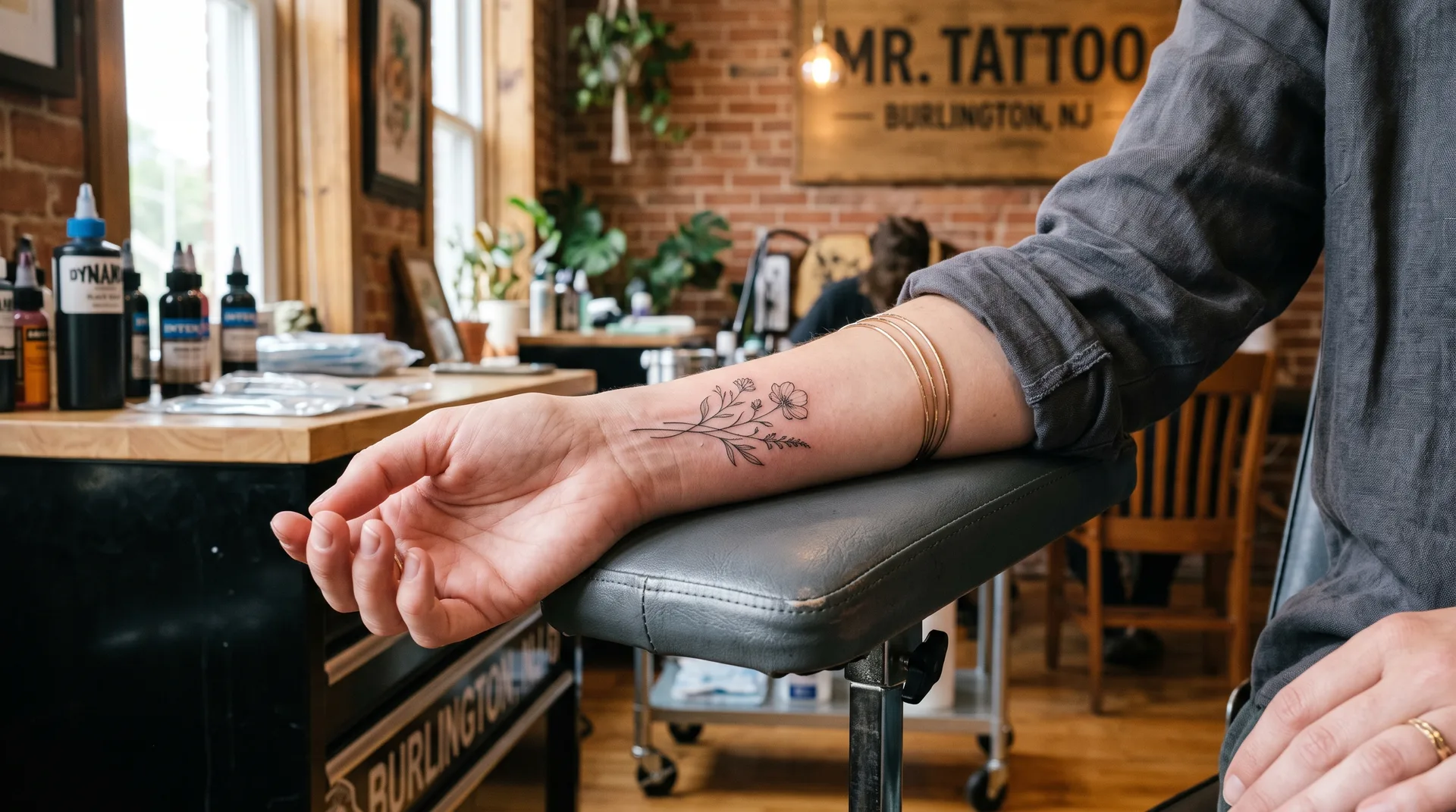
Fine line tattooing uses a single needle or very tight needle groupings to create extremely thin, precise lines. The technique allows for delicate detail work that looks almost like a drawing or illustration on the skin - botanical designs, portraits, handwriting, geometric patterns, and minimalist compositions are all common applications.
The style has exploded in popularity over the past several years, driven largely by social media. The results can be genuinely stunning when done well. But fine line tattooing is also one of the most technically demanding styles to execute correctly, and one of the most misunderstood in terms of how it ages. Anyone considering fine line work should understand both sides of the equation before booking.
At Mr. Tattoo in Burlington, NJ, the artists will give you an honest assessment of whether fine line is the right approach for your specific concept and placement.
What Makes Fine Line Work Actually Good
The difference between fine line work that holds up and fine line work that turns into a blur within a few years comes down to a few technical factors:
- Proper needle depth - Fine line work requires precise needle depth. Too shallow and the ink will not stay. Too deep and the lines will blow out and spread. The margin for error is much smaller than with traditional styles.
- Appropriate spacing - Lines placed too close together will merge as the tattoo ages. A skilled artist designs fine line work with the understanding that lines will soften over time, building in appropriate spacing so the piece still reads clearly at 10 years.
- Placement awareness - Fine line work ages differently depending on where it is placed on the body. Areas with more movement, friction, or sun exposure will cause the ink to fade and spread faster.
- Skin tone consideration - Fine line work on darker skin tones requires different technical approaches than on lighter skin. The artist needs to adjust needle depth, ink choice, and line weight accordingly.
The Honest Truth About How Fine Line Tattoos Age
Fine line tattoos do not age the same way as bold traditional work. This is not a flaw in the style - it is physics. Thin lines spread over time as the ink settles into the dermis. A tattoo that looks razor-sharp at healing will look softer at 5 years and softer still at 10. This is expected and normal.
The question is not whether the tattoo will change - it will - but whether it will change gracefully. A well-designed fine line piece, executed by a skilled artist, will still look intentional and legible as it ages. A poorly designed one will look like a faded blur.
Aftercare also plays a role. The first few weeks after getting a fine line tattoo are critical. The team at Mr. Tattoo will walk you through exactly what to do - and what to avoid - to give your tattoo the best chance of healing cleanly.
Best Placements for Fine Line Tattoos
Placement matters more for fine line work than for almost any other style. Here is a breakdown of how different placements affect the longevity of fine line tattoos:
- Upper arm, shoulder, upper back - These are among the best placements for fine line work. Low friction, relatively consistent skin, and easy to protect from sun exposure.
- Forearm and inner bicep - Good placements with some caveats. Sun exposure on the outer forearm will accelerate fading. The inner bicep tends to hold ink well.
- Ribs and chest - Generally good for fine line work, though the ribcage is one of the more painful placements.
- Hands, fingers, and wrists - These are high-friction, high-movement areas that cause fine line work to fade significantly faster. An artist who is honest with you will tell you this before you book.
- Feet and ankles - Similar to hands - high friction, lots of movement, and frequent sun exposure. Fine line work in these areas requires more frequent touch-ups.
Fine Line vs. Single Needle - What's the Difference?
These terms are often used interchangeably but they describe slightly different techniques. Single needle tattooing uses literally one needle point, producing the finest possible lines. Fine line tattooing typically uses a tight grouping of two to five needles, which allows for slightly more ink deposit and can produce slightly more durable results.
Both techniques require a high level of skill and produce beautiful results in the right hands. The choice between them depends on the specific design and the artist's assessment of what will work best for your concept and placement.
Getting Fine Line Work Done Near Burlington and Camden County
Mr. Tattoo is located at 673 High St in Burlington City, a short drive from most of Burlington County and accessible from Camden County towns like Cherry Hill, Voorhees, and Maple Shade. Clients also come from Moorestown, Marlton, Mount Laurel, and Cinnaminson.
The best first step for fine line work is a consultation. Bring your reference images, talk through your placement, and get an honest assessment of what will work. You can book a consultation online or walk in during open hours. The artists at Mr. Tattoo will tell you exactly what to expect from the style before anything starts.
Serving Burlington & Camden County
Burlington, NJ - 673 High St
Interested in Fine Line Work?
Book a consultation and bring your references. The artists at Mr. Tattoo will walk you through what will work best for your concept and placement.